
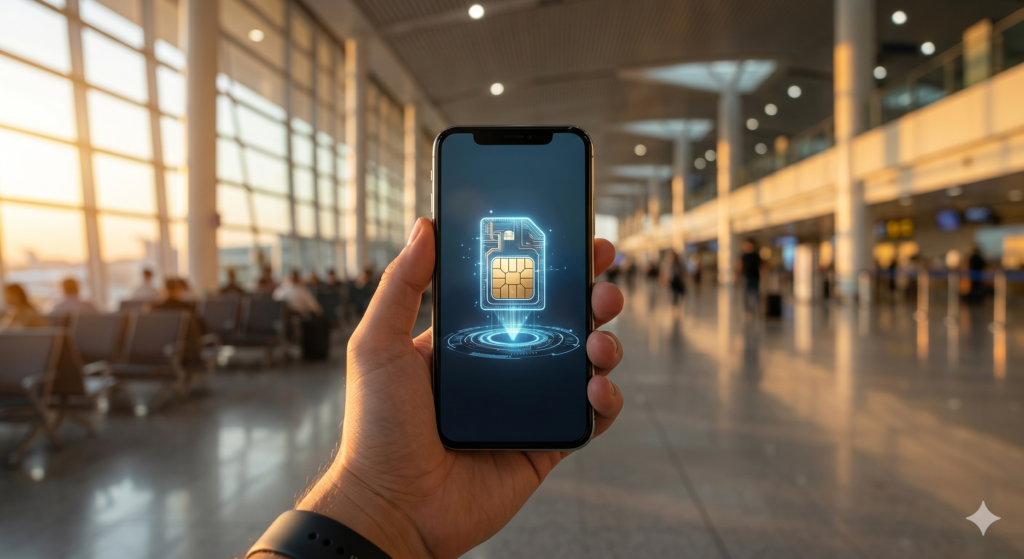
Do you remember the “good old days” of arriving in a new country? You’d spend your first crucial hour hunting for a physical SIM card, wielding that tiny metal pin like a high-stakes surgeon, hoping not to lose your primary SIM in the airport bustle. That hassle is now a relic of the past, thankfully. The eSIM (embedded SIM) revolution has completely transformed how we stay connected globally. If your phone was made in the last few years, it almost certainly supports this magical technology, letting you download a digital data plan in seconds, often before you even step off the plane.
As we navigate the sophisticated travel landscape of 2026, the market is crowded with providers all vying to be your digital companion. Connectivity is no longer a luxury; it is the fundamental tool for navigation, translation, and communication. However, knowing which service to trust—which offers the right balance of speed, coverage, and value—can be overwhelming. This isn’t just about data; it’s about peace of mind. We have thoroughly tested the leading contenders, analyzing real-world performance from Tokyo to Timbuktu, to give you the definitive answer.
This comprehensive guide will break down the absolute best eSIM for international travel in 2026. We are placing the three biggest powerhouses—Airalo, Saily, and Yesim—under the microscope. We’ll examine their pricing, coverage networks, user experience, and those critical details that separate a seamless trip from a frustrating, offline disaster. Which provider deserves a digital spot on your device? Read on to discover the ideal choice for your next adventure.
The eSIM Landscape of 2026: Why You Must Switch
The “why” of the eSIM is now settled: convenience and cost. We are well beyond the era when switching required opening your phone. In 2026, connectivity is infrastructure, and the physical SIM card feels as archaic as a paper map (though those still have charm). For any traveler, an eSIM is essential. It provides immediate access to local networks, bypassing exorbitant carrier roaming fees that used to haunt post-vacation bank statements. It means you can land, activate, and immediately call a ride or check map directions. Furthermore, it enhances security by allowing you to keep your primary, physical SIM active for crucial two-factor authentication texts from your bank, while using the eSIM for all your heavy data lifting.

Airalo: The Trusted Pioneer in Global Data
You cannot discuss eSIMs without starting with Airalo. They were one of the first, a true pioneer that fundamentally simplified the global connectivity game. Airalo’s vast ecosystem is their greatest strength, offering coverage in over 200 countries and regions. Their sheer scale means they have established robust local network partnerships. When you purchase an Ahal local plan, you are rarely getting a generic, throttled connection; you are accessing one of the premium networks in that country. This established reliability is why they remain a favorite for millions. Their app is a model of intuitive design, making purchasing and activation seamless even for the tech-averse traveler.
The Airalo model is built on tailored, country-specific plans. You buy what you need: 1GB for a quick stopover, or 20GB for a month of exploration. For frequent travelers, their regional (e.g., Eurolink) and global plans offer incredible flexibility, covering dozens of countries under a single eSIM profile. This prevents the need to manage multiple digital cards. In 2026, their global plan is smarter than ever, featuring automatic network switching that is almost undetectable. If you value a proven track record, intuitive design, and the widest possible global footprint, Airalo remains the benchmark by which others are measured.
Saily: The Modern, Security-First Newcomer
Saily is a younger contender, but they have made substantial waves by focusing on two pillars: simple, competitive pricing and integrated security. Developed by the same team behind popular privacy tools, Saily approaches connectivity with a modern sensibility. Their marketing is refreshingly clear: they don’t bury you in technical jargon or dozens of conflicting plan types. You get simple, high-speed data, with excellent coverage and a very modern, minimalist app. The user experience is designed to be instantaneous. You select your destination, choose your data amount (their 7-day and 30-day buckets are very popular), and you’re ready to activate.
Where Saily truly differentiates itself is by appealing to the modern, privacy-conscious digital citizen. While all eSIM traffic is encrypted by standard mobile protocols, Saily positions itself as part of a secure travel toolkit. Their background in security infrastructure suggests a high standard of back-end privacy protection. While they don’t have the vast number of specific country plans that Airalo does, they cover the most popular 150+ destinations exceptionally well. If you are looking for a straightforward, fast setup and appreciate a brand that prioritizes privacy, Saily is a compelling, modern alternative that feels tailor-made for the travelers of 2026.
Yesim: The Flexible and Feature-Rich Alternative
Yesim is the clever, flexible dark horse in this race. If Airalo is the dependable veteran and Saily is the minimalist newcomer, Yesim is the feature-rich contender designed for maximum flexibility. Their most distinctive feature is the option for a “Pay as You Go” plan. Rather than committing to 10GB upfront for a month, you can pre-load your account with credit and only pay for the kilobytes you actually consume. This is revolutionary for travelers who may have widely varying data needs—some days heavy (navigating, video calls), some days light (relying on hotel WiFi). This ensures you never pay for data you don’t use, which is a major win for budget efficiency.
Furthermore, Yesim integrates several extra features that appeal to power users. Their “Virtual Number” service (available for an extra fee) is a game-changer, allowing you to receive SMS verifications (like for setting up local ride-hailing or food delivery apps) without exposing your main number, enhancing both convenience and security. While Yesim’s base per-GB prices on standard plans can sometimes be slightly higher than the others, the combination of Pay as You Go flexibility and unique additional features makes them an invaluable tool. They are the ideal choice for long-term travelers, digital nomads, or anyone who wants complete control over their connection model.
Connectivity and Speed in 2026: What to Expect
By 2026, 5G is the global standard in almost every major city and tourist destination. In the vast majority of cases, whether you are using Airalo, Saily, or Yesim, you will get blazing-fast 5G data that allows for high-definition video streaming, lag-free navigation, and flawless Zoom calls. However, coverage is still dictated by local geography and the strength of the partner network. Airalo, with its extensive network history, often has partnerships with multiple Tier-1 carriers in a single country, offering the best chance of coverage in rural areas. But all three providers deliver robust performance where 99% of travelers need it most.
The actual difference in day-to-day use is rarely about maximum throughput speed, but about consistency. A stable, fast 4G connection is infinitely more useful than an unstable 5G signal that constantly drops. All three providers have matured significantly, and network stability issues are now very rare. The key is to manage your connection. If you are ever on public WiFi—whether at an airport, cafe, or hotel—we strongly advise using a robust NordVPN. Public networks remain high-risk environments, and a quality VPN adds that crucial layer of encryption, ensuring your personal data and browsing are secure from digital eavesdroppers, regardless of which eSIM is powering your connection.
User Experience, Activation, and Customer Support
The “Merlin” approach to technology is that it should feel magical, which means it should be invisible. All three companies have mastered the user journey. For Airalo, activation is almost instantaneous via a QR code or direct installation from their app. Their customer support is excellent, offering 24/7 chat with real, helpful humans (a critical detail in 2026). Saily focuses on the minimalist experience; their activation is arguably the fastest, often just one or two taps inside the app. Their interface is so streamlined that support is rarely needed, but when it is, it’s integrated well.
Yesim, owing to its increased feature set, requires a slightly steeper learning curve than the others, but they have done an excellent job of organizing their complex tools (like Virtual Numbers and multiple eSIM profiles) intuitively. Their support is responsive, but the sheer variety of functions means you might spend a few more minutes setting everything up. Ultimately, for the vast majority of travelers, the activation process for any of these three will take less than two minutes from purchase to being online. They all understand that in 2026, friction is the enemy.[PRE_FAQ_IMAGE_GOES_HERE]
Merlin’s Verdict: The Final Showdown
So, which is the best eSIM for international travel in 2026? Here is the expert synthesis you came for: Airalo is the undisputed “King of Coverage” and the best all-around choice for reliability and ease of use, especially for multi-country trips and anyone seeking maximum peace of mind. Saily is the premier “Security & Simplicity” pick, perfect for the modern traveler who wants a minimalist, fast experience with a modern, trusted brand. Yesim is the “Flexibility & Features” champion, essential for power users, digital nomads, and anyone who wants unique tools like Virtual Numbers or a “Pay as You Go” model.
My advice? For 90% of travelers, Airalo is the safest bet that just works. But if you value minimalism, Saily is a fresh breath of air. Our Top Expert Tip: Always install your eSIM before you leave home. Connect to your reliable home WiFi, download the profile, and complete the main setup. You can keep the line ‘turned off’ until you arrive. That way, as soon as your plane lands, you simply toggle the switch in your settings, and you are instantly online. There is no anxiety, no waiting, and no searching for connectivity. That is true travel magic.

FAQ: Your eSIM Questions, Answered
Can I keep my physical SIM card inside my phone while using an eSIM?
Absolutely. This is the superpower of modern phones. You keep your existing, primary SIM card in its slot. This allows you to still receive calls and, crucially, text messages (important for two-factor authentication from your bank or work) on your original number. You then install the eSIM as your second line and configure your phone to use the eSIM strictly for all cellular data. It’s the perfect dual-setup that gives you the best of both worlds: local, affordable data without losing access to your home network.
What happens to my data plan if I cross into a different country?
This depends on the plan you purchased. If you bought a single-country plan (e.g., just for Italy) and you cross into France, your data will stop working. You will need to purchase a new plan for France. However, if you purchased a **regional plan** (like a European regional eSIM from Airalo or **Saily**), it covers dozens of specified countries. You can travel seamlessly between them, and the eSIM will automatically connect to the partner network in the new country without you having to do anything.
Does using an eSIM drain my phone’s battery faster?
Modern smartphones are exceptionally well-optimized for managing dual-SIM setups (physical + eSIM). While technically your phone is communicating with two different cellular networks simultaneously, the incremental battery drain is negligible. The largest consumers of your battery are always the display brightness, heavy processing tasks, and constant searching for a signal in poor coverage areas. Using an eSIM is efficient, and you won’t notice any significant impact on your device’s daily battery life.
Is my personal data safe when using an eSIM provider?
Yes. The connection between your device and the cellular network is encrypted using standard, highly secure mobile telecommunications protocols, the same security you get with a traditional physical SIM card. Furthermore, providers like Saily are built by teams with a strong background in data privacy, applying stringent back-end security practices. When you purchase an eSIM from these reputable companies, your personal information is managed with modern data protection standards. We always advise using strong, unique passwords for your account with any provider.
Are eSIMs significantly cheaper than just using my carrier’s roaming plan?
In almost every single scenario, yes, significantly. Traditional major carriers often charge exorbitant flat daily roaming fees (e.g., $10-$15 per day) for just a few hundred megabytes of data, or worse, charging per kilobyte. With an eSIM, you are accessing local rates. A typical 30-day eSIM plan for 5GB or 10GB will often cost between $10 and $30 *total* for the entire trip, which is less than what your home carrier might charge for just two days of roaming. For any trip longer than a day or two, an eSIM offers massive savings.
Conclusion
Staying connected while exploring this incredible planet has gone from a logistical challenge to a seamless part of the modern adventure. The eSIM isn’t just technology; it is liberation. liberate you from stress, from waiting, and from unexpected fees. Whether you choose the unparalleled global reach of Airalo, the sleek simplicity of Saily, or the innovative flexibility of Yesim, you are making a choice that prioritizes your experience. We hope this definitive 2026 guide helps you find the perfect digital partner for your next journey. Don’t leave your connectivity to chance; plan it with Merlin. For personalized itineraries, flight deals on Kiwi, and unique experiences on Klook, visit travelwithmerlin.com today. Safe travels and happy exploring!