
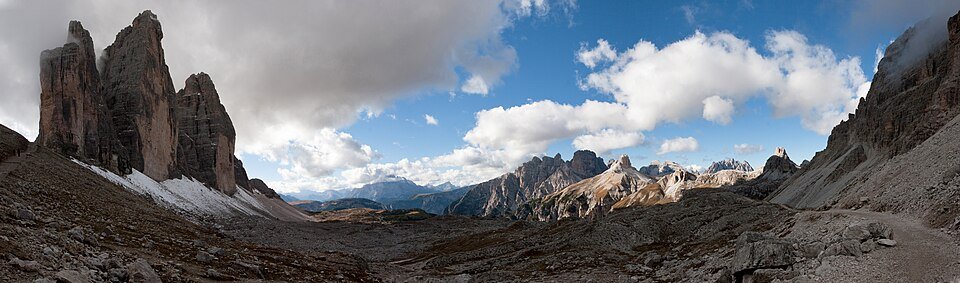
This post may contain affiliate links. If you make a purchase through one of them, we may earn a small commission at no extra cost to you. See our Affiliate Disclosure for details.
I’ll be honest: nothing in twelve years of wandering has stopped me in my tracks quite like the Dolomites. I’d seen the photos everyone’s seen: the jagged grey spires, the turquoise lakes, the meadows that look painted on. I still wasn’t ready for it in person. I spent five days hiking through the Val Gardena and Cortina d’Ampezzo areas, and this is the itinerary I’d hand to a friend without changing a thing.
This isn’t a “see everything” itinerary. Five days in the Dolomites means picking one well-connected base and hiking hard, not chasing every viewpoint on Instagram. Here’s exactly how I split my time, the trails I’d do again, and what I’d pack differently next time.
Best Time to Visit the Dolomites for Hiking
The hiking season here is short. Rifugios (mountain huts) and chairlifts generally run from late June through late September, and that’s really the window you want. I went in the last week of June and got lucky: wildflowers still out, trails clear of snow, and the summer crowds hadn’t fully arrived yet.
One thing I wish someone had drilled into me before I left: afternoon thunderstorms are a near-daily event in July and August, usually rolling in between 2 and 5pm. Every long hiking day on this itinerary starts early, around 7 or 8am, so I could be back below the treeline before the sky turned on me. If you want fewer people and don’t mind cooler mornings, mid-September brings golden larch forests and noticeably quieter trails.
How to Get to the Dolomites
Venice and Milan are the two airports that make sense. Venice is the easier pick if you’re based around Cortina d’Ampezzo and the eastern Dolomites. It’s roughly a two-hour drive via the A27 toward Belluno and then the SS51. Milan works better if Val Gardena and the western Dolomites are your priority.
You need a car for this trip. I can’t stress that enough: public transport exists, but it will eat entire days you don’t have. I picked up a rental at the airport and drove in via the Brenner Pass, which is the classic route from the north if you’re coming through Austria.
My 5-Day Dolomites Itinerary at a Glance
- Day 1: Arrive in Val Gardena, easy legs stretch in Alpe di Siusi
- Day 2: Seceda and the Odle (Geisler) peaks
- Day 3: Passo Gardena scenic drive to Cortina d’Ampezzo
- Day 4: Lago di Braies and Prato Piazza
- Day 5: Tre Cime di Lavaredo, the big finale
Base yourself in two spots to cut down on driving: two nights in Val Gardena (Ortisei or Selva di Val Gardena work well), then two nights around Cortina d’Ampezzo.
Which Dolomites Hike Should You Actually Prioritize?
If you only have time for one hike on this whole trip, make it Tre Cime di Lavaredo. It’s the single most iconic trail in the Dolomites and the one most people are picturing when they book this trip in the first place. Here’s how all five days stack up against each other, so you can trim the itinerary if you’re tighter on time:
| Day | Hike / Area | Difficulty | Time Needed | Crowd Level | Easiest Access |
|---|---|---|---|---|---|
| Day 1 | Alpe di Siusi | Easy | 2-3 hours | Moderate | Cable car from Ortisei |
| Day 2 | Seceda & Val di Funes | Moderate | 4-5 hours | High from mid-morning on | Cable car from Ortisei |
| Day 3 | Cinque Torri | Easy | 1-2 hours | Low | Short walk from parking near Passo Falzarego |
| Day 4 | Lago di Braies & Prato Piazza | Easy | 2-3 hours combined | Very high at the lake, low at Prato Piazza | Drive-up parking (arrive early) |
| Day 5 | Tre Cime di Lavaredo | Moderate | 3-4 hours | Very high | Toll road to Rifugio Auronzo |
Tip: swipe sideways on mobile to see the full table.
Day 1: Alpe di Siusi, Europe’s Largest Alpine Meadow
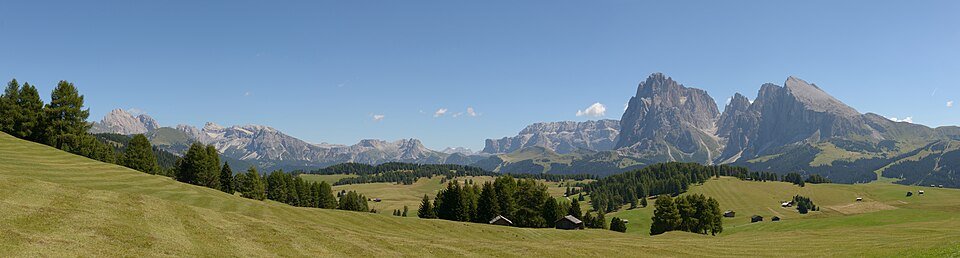
I used my first afternoon to ease into altitude rather than throw myself at a summit. Alpe di Siusi is exactly what it sounds like: a vast, rolling alpine meadow, the largest of its kind in Europe, with the jagged Sassolungo massif rising behind it like a stage backdrop. Cars aren’t allowed onto the plateau in summer, so I parked in Ortisei and took the cable car up.
The walking here is gentle (think 2-3 hours of rolling meadow paths rather than technical climbing), which made it the right call after a travel day. Grab a coffee at one of the mountain huts scattered across the plateau and just sit with the view for a while. You’ll want the legs fresh for tomorrow.
Day 2: Seceda and the Odle Peaks
This was, without question, my favorite single day of the trip. Take the Ortisei to Furnes to Seceda cable car combination up to 2,500 meters and you’re greeted by one of the most photographed ridgelines in the Alps: the jagged Odle (Geisler) group cuts into the sky on one side, with green slopes dropping away on the other.
From the top station, I hiked the ridge trail toward Val di Funes, dropping slowly through pasture and pine before looping back. Budget 4-5 hours if you want to walk down rather than ride the lift back. Start early, since this spot gets busy by mid-morning once the day-trippers arrive from Ortisei.
Day 3: Passo Gardena to Cortina d’Ampezzo
Day three is a transition day, and I made it count by turning the drive itself into the destination. The road over Passo Gardena and onward through Passo Falzarego is one of the great alpine drives anywhere, with switchbacks stacked against rock walls and pull-offs begging you to stop every few minutes.
I broke up the drive with a short walk at Cinque Torri, an open-air museum of preserved WWI trenches and tunnels set among five distinctive rock towers, with 360-degree views back toward the peaks. It’s an easy 1-2 hour add-on, and a good leg-stretch before settling into Cortina for two nights.
Day 4: Lago di Braies and Prato Piazza
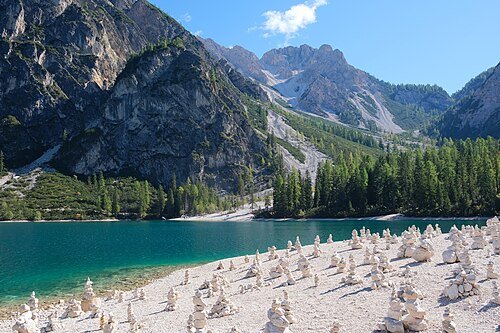
Lago di Braies is the lake you’ve seen on every Dolomites Pinterest board, and yes, the color is real. It’s also, unsurprisingly, mobbed by mid-morning, so I arrived just after sunrise to get the classic reflection shot with the water still glassy and almost no one else on the shore.
After an hour at the lake, I drove up to Prato Piazza, a high alpine plateau that gets a fraction of the visitors Braies does despite being just as scenic. It’s a gentler, quieter counterpart: rolling grassland ringed by dolomite peaks, and a good spot for an easy 2-hour walk before saving your legs for tomorrow.
Day 5: Tre Cime di Lavaredo, the Grand Finale
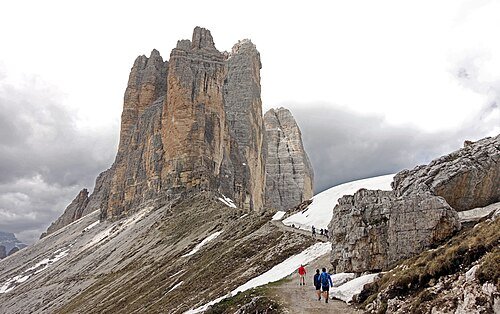
I saved the best-known hike for last on purpose. The Tre Cime di Lavaredo loop is the single most iconic hike in the Dolomites, circling three dramatic rock towers that once marked the front line between Italy and Austria-Hungary. You’ll still spot old WWI fortifications along the trail.
Start at Rifugio Auronzo, reachable by a (paid) mountain toll road, and follow the well-marked loop past Rifugio Locatelli, where the classic postcard view of the three peaks opens up across a small lake. The full loop took me around 3-4 hours at an easy pace, with plenty of stops for photos. Get there early: the Auronzo toll road parking fills up fast, and this trail earns its reputation as the busiest in the range.
Where to Stay in the Dolomites
Split your nights rather than commuting long distances each day. In Val Gardena, Ortisei and Selva di Val Gardena both give you quick cable car access to Alpe di Siusi and Seceda. Around Cortina, staying in town puts you within easy driving range of Lago di Braies, Prato Piazza, Cinque Torri and Tre Cime. Book well ahead for summer, and especially for 2026, since the Winter Olympics spotlight on Cortina is already pushing up demand for accommodation throughout the year.
What to Pack for Dolomites Hiking
Weather swings hard here: it’s roughly 6°C colder for every 1,000 meters you climb, so a warm afternoon in the valley can mean windbreaker-and-gloves weather at a rifugio. A few things I was glad to have:
- Trekking poles, genuinely useful on the steeper descents off Seceda and around Tre Cime.
- Waterproof hiking boots, since trails can be muddy early in the season and after afternoon storms.
- A packable rain jacket. Those 2pm storms aren’t a maybe, they’re a when.
- A 20-25L daypack, with enough room for layers, water, and lunch without weighing you down.
Final Thoughts from the Trail
Five days is enough to fall properly in love with the Dolomites, but it will also make you start planning the next trip before you’ve left. If I had a sixth day, I’d have pushed further east into the Sesto Dolomites. For now, this loop of meadows, ridgelines, a very blue lake, and those three unmistakable peaks is the itinerary I keep recommending to anyone who asks where to hike in Italy.